
Blog
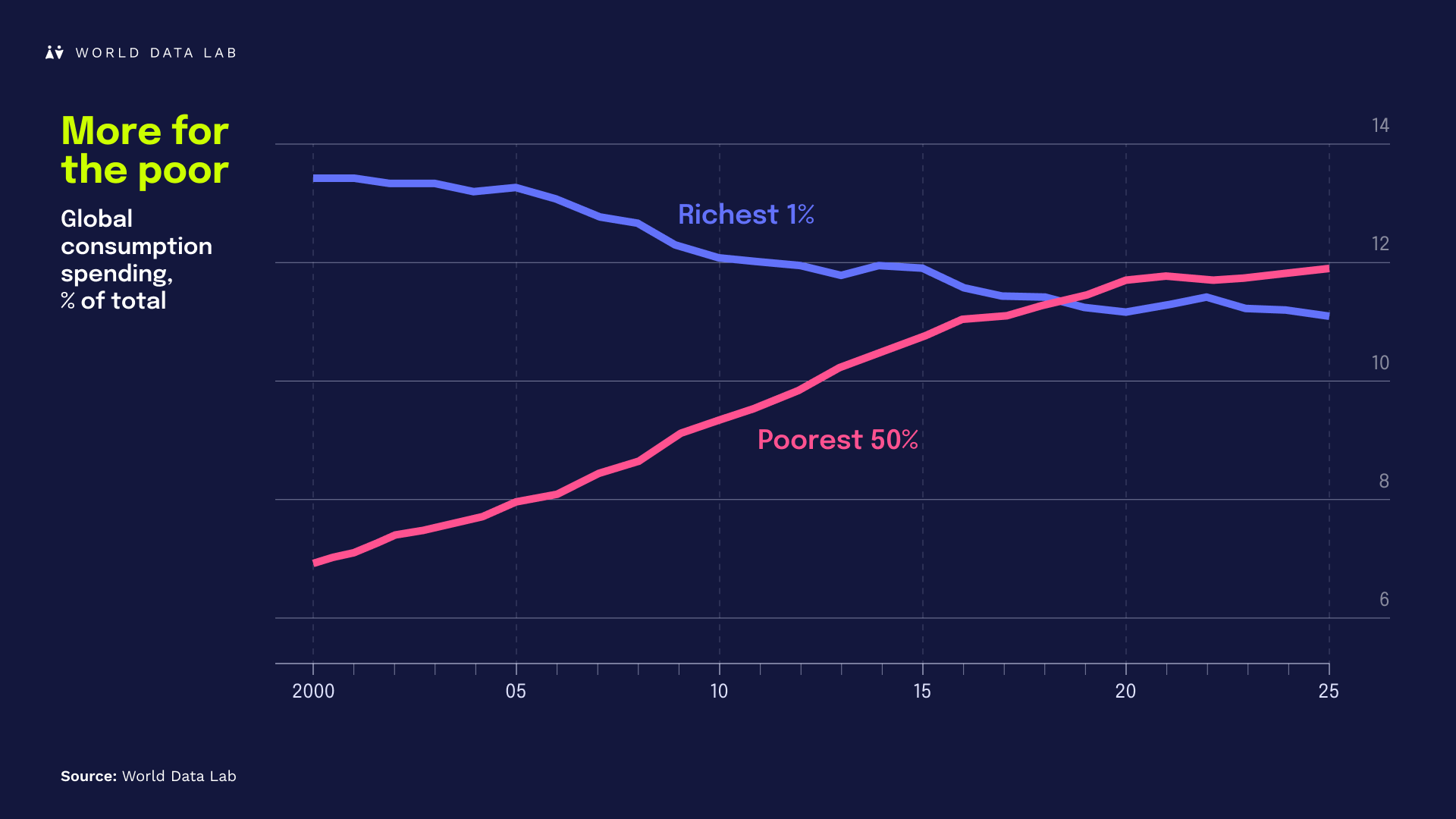

AT FIRST GLANCE the global economy looks more uneven than ever: billionaires’ fortunes keep breaking records, asset prices have soared and voters across rich countries insist that life is getting harder and more expensive. Yet in the 21st century the world economy has kept getting more equal.
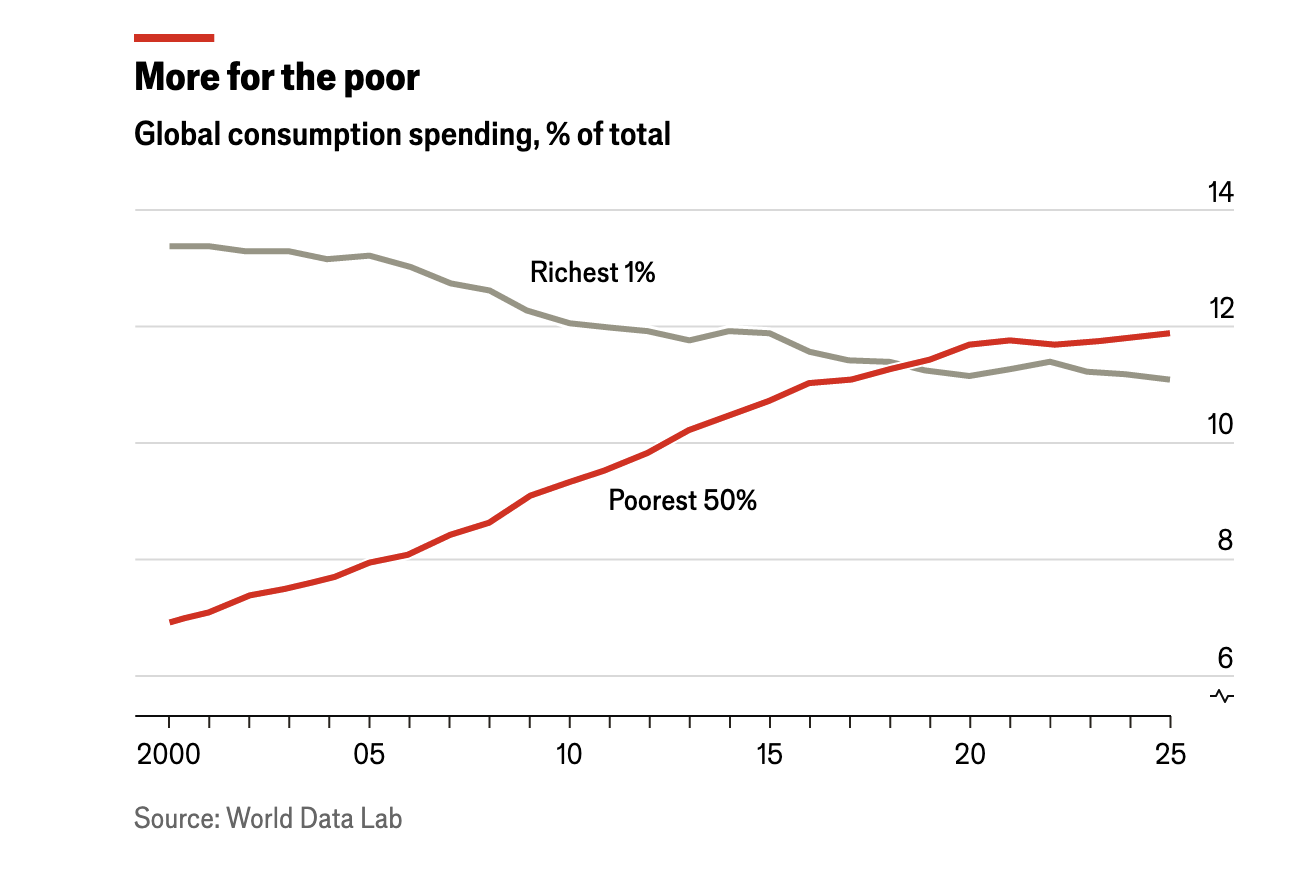
Data released on January 20th, covering 194 countries and economies, and compiled by the World Data Lab, a research firm, show that the ratio between spending by the world’s richest 10% and the poorest 50% has more than halved since 2000. Back then, the rich spent about 40 times more than the poor; today the figure is closer to 18. Over the same period, the richest 1% have also seen their share of consumption shrink.
The shift is driven mostly by gains in low- and middle-income economies, rather than changes in rich countries. Poorer countries have grown faster than rich ones and consumption has risen with incomes. The ratio of average American to Indian spending, for instance, has more than halved over the past 25 years, from more than 16 to less than eight.
Spending inequality within countries can tell a different story. Some rich countries became more unequal in the late 20th century even as global inequality fell. In the past decade the richest 10% have pulled away from the poorest 50% in Japan, Denmark, Iceland and Sweden.
But in many countries where populist politicians lament that poor folk have been left behind, consumption gaps have more recently narrowed—suggesting that lower-income households are catching up. This has happened quickly in Spain and Greece, and also in Britain and France. Inequality can be gauged in different ways. On consumption, it’s mostly good news.■
Full article found here: https://www.economist.com/graphic-detail/2026/02/03/the-world-is-more-equal-than-you-think